
The mould library, with the numbers attached.
Every model on this page is a mould we own and keep in production. The confirmed figures — output, mass, ingress, housing and light sources — are below; beam distance and runtime will be released with the ANSI/NEMA FL1 report at launch. Choose a platform; the performance tier is yours to set.
| Code | Model | Housing | Status | Sample lead time |
|---|---|---|---|---|
| HL-M1 | Ultralight flagship | Die-cast magnesium | Launching Q4 2026 | From Q4 2026 |
| HL-M2 | Compact everyday | Die-cast aluminium and CNC machining | Tooling · 2026 Q4 | Samples 2027 Q2 |
| HL-M3 | High-output professional | Die-cast aluminium | In production | Samples from Nov 2026 |
Sample lead time is the time to a branded, measured pre-production unit on an existing mould. It assumes the specification is already fixed — the option matrix on the ODM page shows what can change.
The lightest metal body we make.
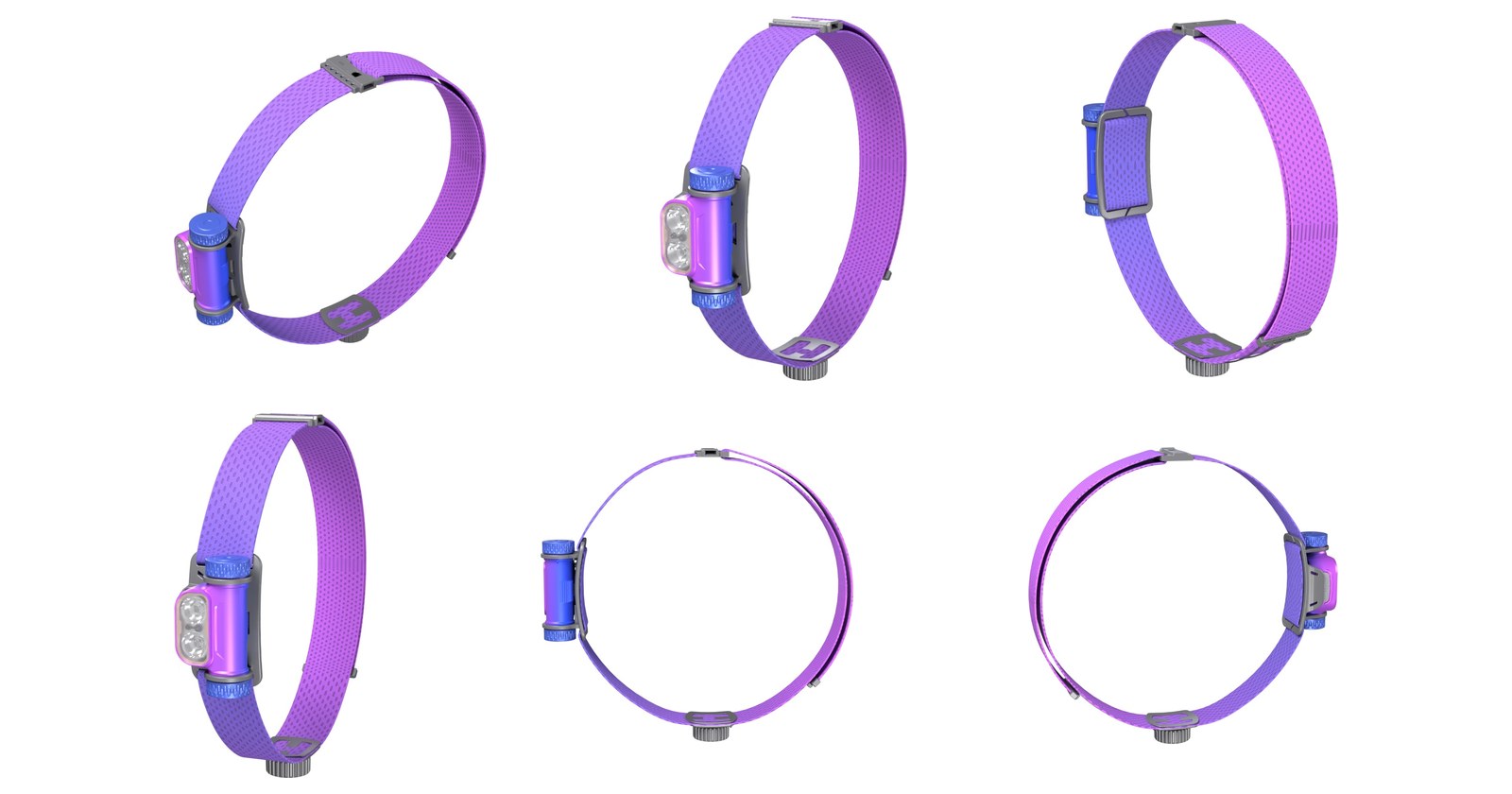
Same three duties as every headlamp — structure, heat path, sealing — carried in a metal at roughly two-thirds the density of aluminium. The M1 is not an M3 with a different alloy order: magnesium fills thin sections at a different rate, needs its own cover gas, and the raw casting needs a conversion coating before paint will hold. All three of those are solved in the design and the supply chain we manage. What the wearer gets is the same thermal work at the front of the head with less mass on the band; what you get is a metal-bodied headlamp that still lands in a mid-market retail band instead of a specialist one.
Output & runtime
- Max output1,600–1,800 lm
- Beam distance170 m (ANSI FL1, target)
- Light sourcesSpot + wide flood + red
- RuntimeFull mode table on the FL1 datasheet at launch
Optical & power
- LEDHigh-power spot + flood, bin-selected
- Colour temperature5,000 K neutral + 3,000 K warm + red
- CRI90+ on flood
- OpticTIR spot over reflector flood
- Battery1× 18650 Li-ion (CR123A backup)
- ChargingUSB-C
Body & finish
- HousingMagnesium die-cast, AZ91D
- BezelCNC-machined, anodised
- ControlDual top buttons + electronic lockout
- BandOne-hand adjustable, silicone grip + whistle
- BrandingLaser-marked, nothing moulded in
Environment
- IngressIP68 — 2 m submersion
- Impact2 m drop, six faces
- Operating temp.−20 °C to +55 °C
- Mass, with cell & band≤135 g
- Charging portUSB-C under sealed flap
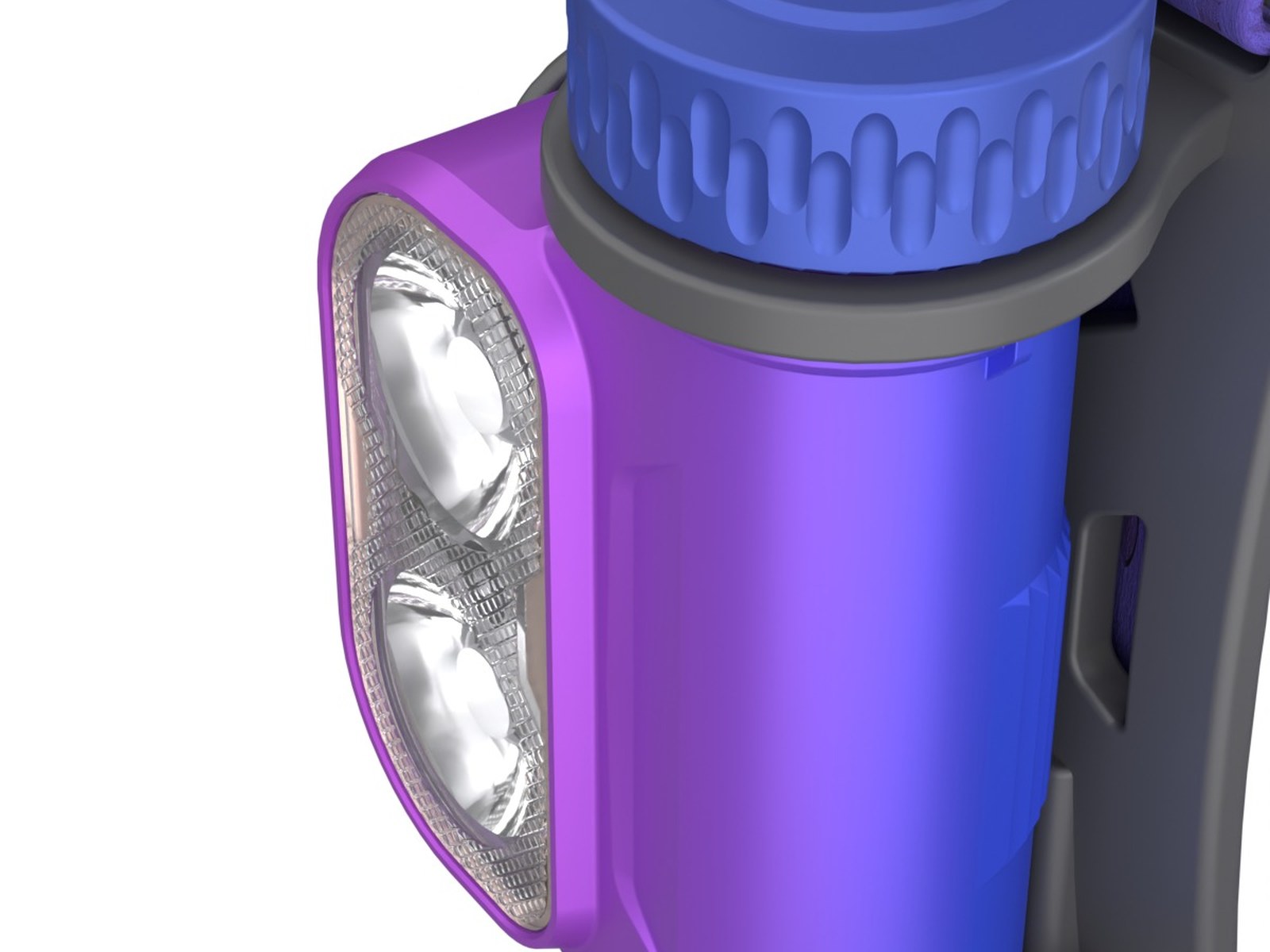
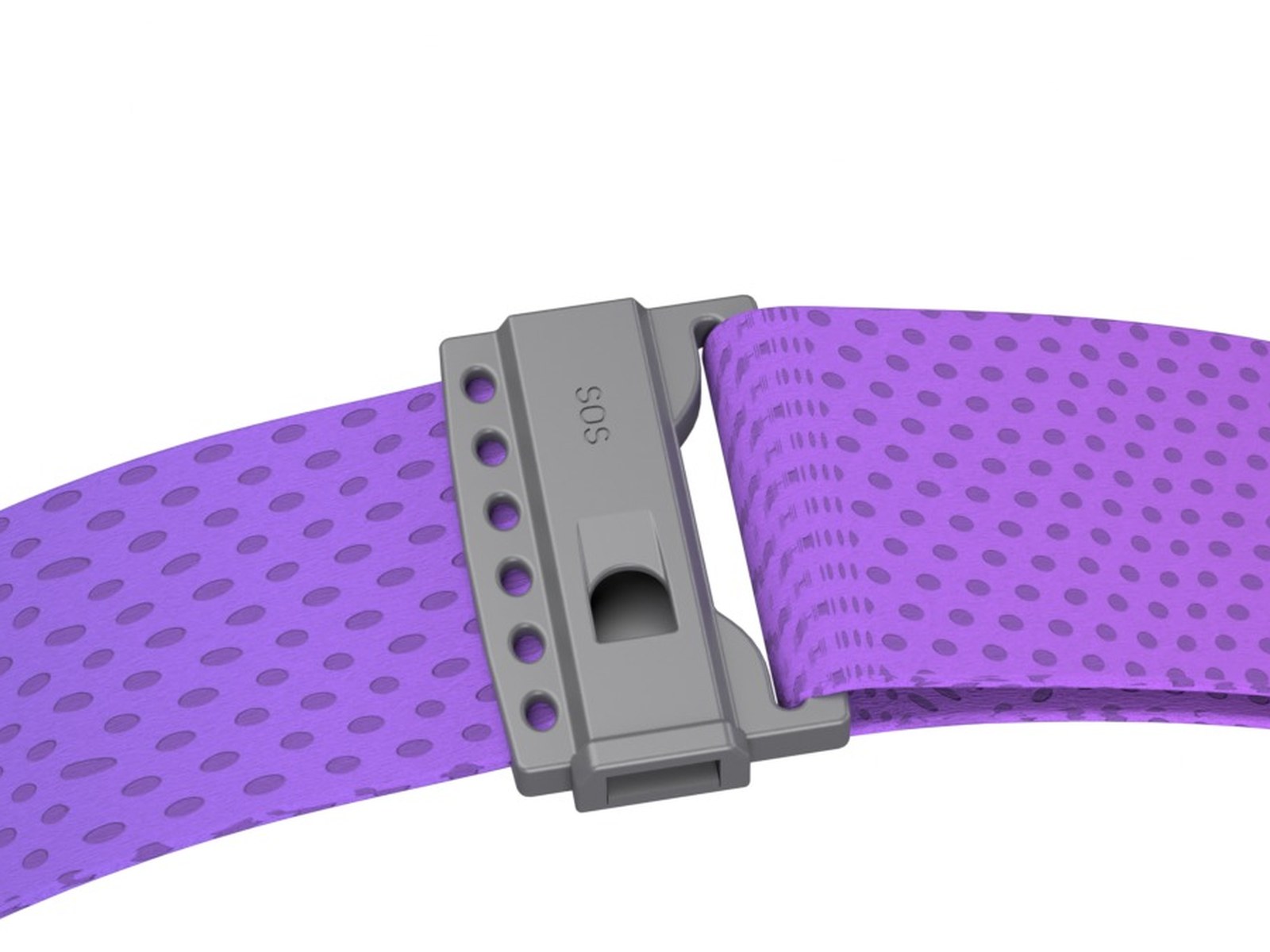
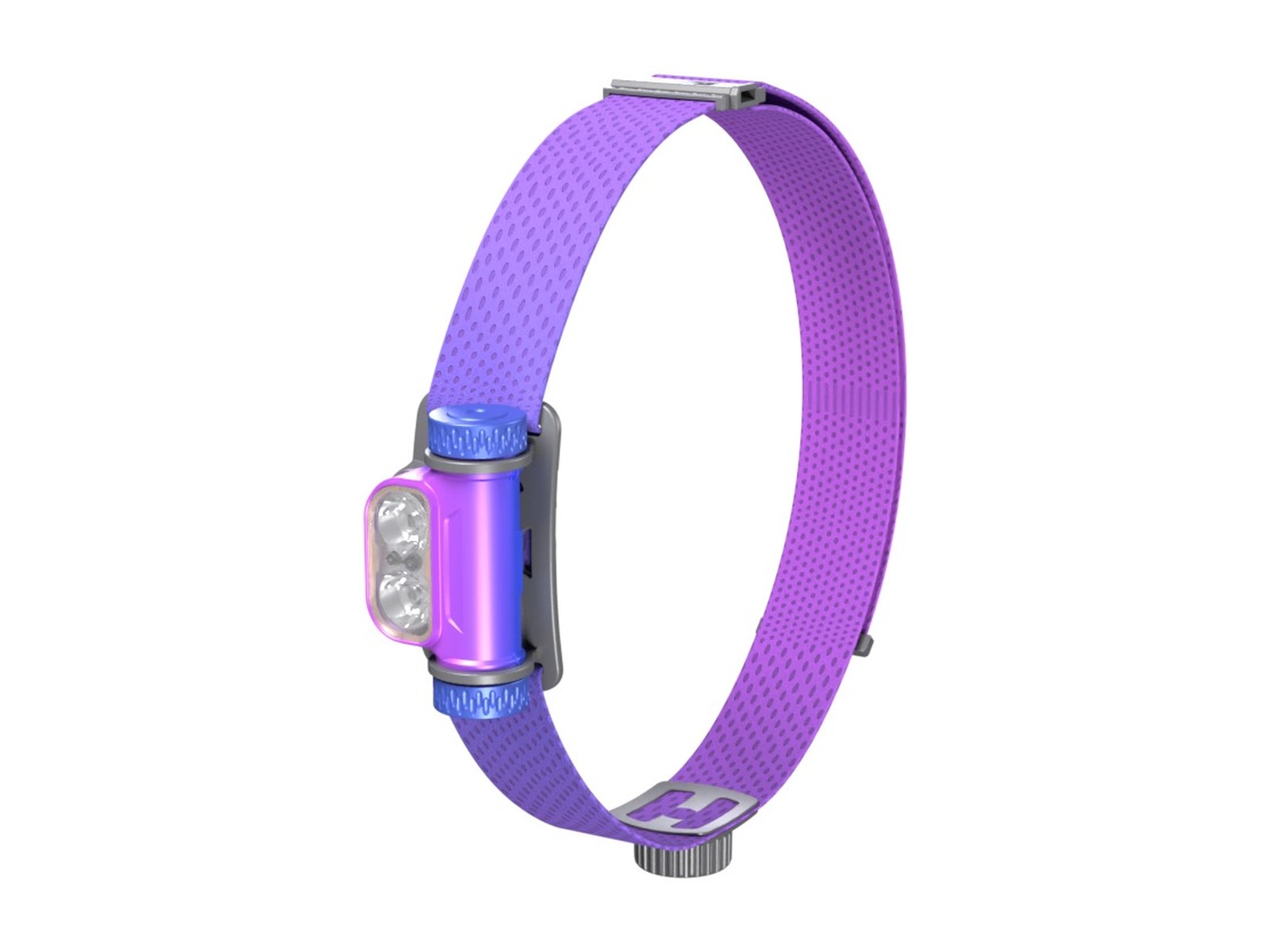
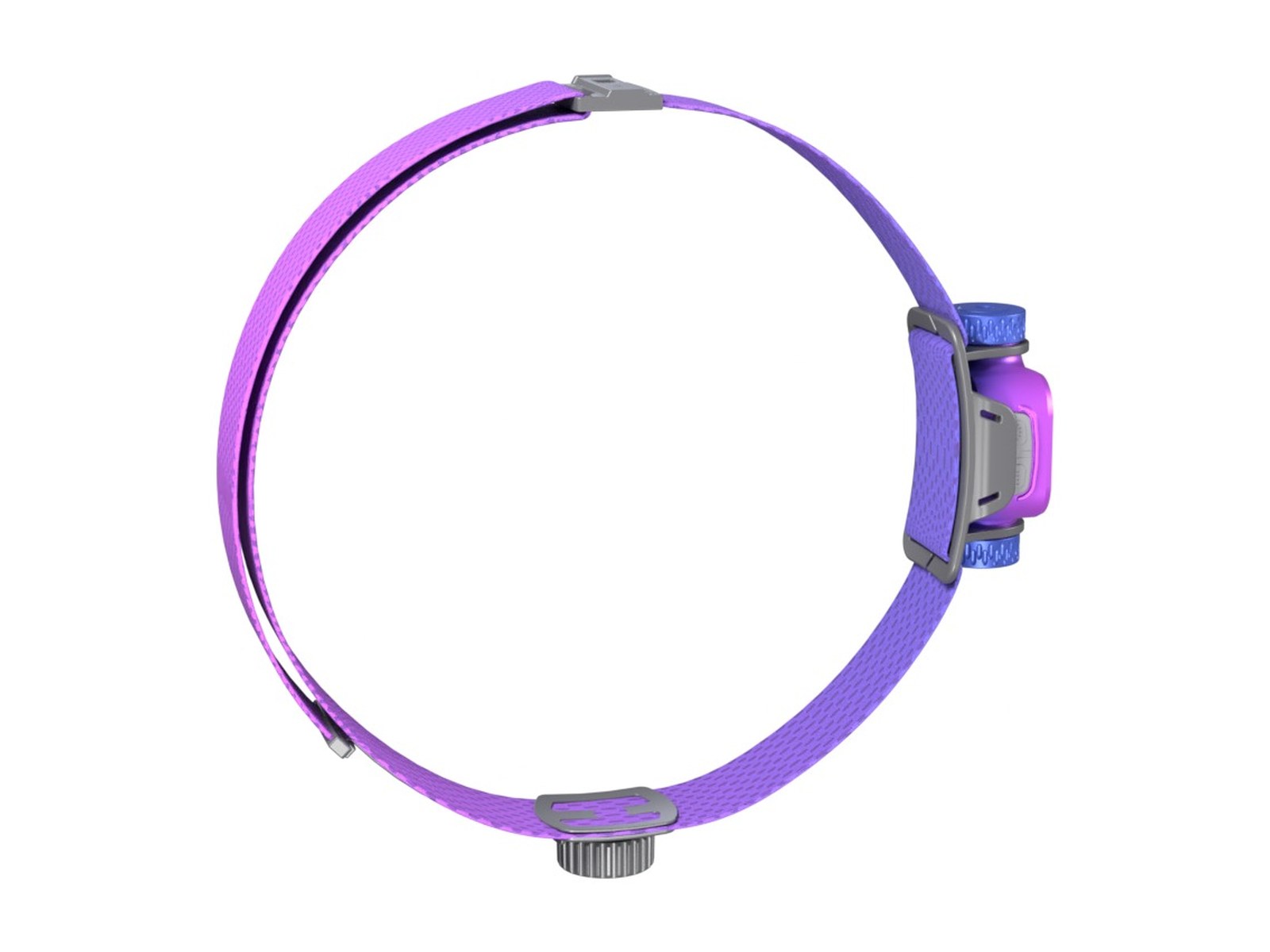
- Fixed on this mould: housing geometry, optic position, sealing groove, button location, band anchors.
- Yours to set: LED bin and colour temperature, driver output levels, battery capacity, finish and colourway, logo, packaging, accessories, plug and market label.
Output, mass, ingress, housing and light-source figures are confirmed for the current configuration. Beam distance and runtime are design targets pending the ANSI/NEMA FL1 third-party report, issued with the datasheet at launch. All figures are measured on the in-house integrating sphere at 25 °C ambient; a datasheet is issued against the exact configuration you order.
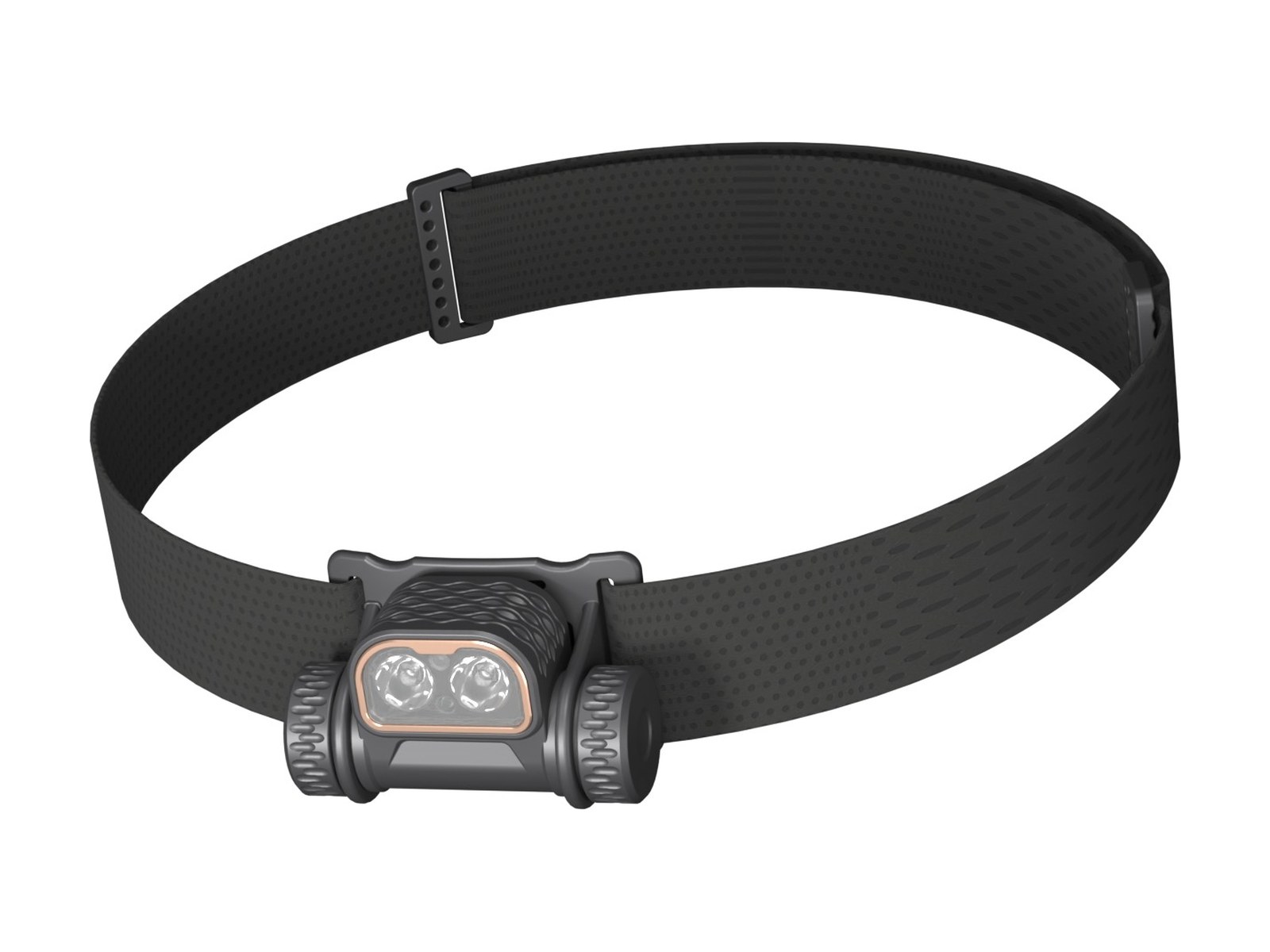
The compact headlamp, built for every day.
The M2 keeps the die-cast metal philosophy of the M3 — a machined, sealed metal body rather than a moulded shell — but folds the cell into the lamp itself, which is what lets it sit in the everyday and retail-volume tier. Less output, less mass, the same sealed metal construction.
Like every library model, nothing is moulded in: the window frame, the end caps and the band anchors are all faces we can cut and mark for your programme.
Output & runtime
- Max output1,200 lm
- Beam distance175 m (ANSI FL1)
- Light sourcesSpot + flood + guide-light red
- RuntimeFull mode table on the FL1 datasheet at launch
Optical & power
- LEDTriple-source: spot + flood + red
- Colour temperature5,000 K neutral, CRI 90+ (flood)
- Red lightSteady + flash (also lockout entry)
- OpticMulti-element reflector
- Battery1× 18350 Li-ion (in-lamp)
- ChargingUSB-C — body and pocket cell
Body & finish
- HousingAluminium die-cast, A6061-T6
- ControlSingle side button + lockout + low-batt warning
- BrandingLaser-marked, nothing moulded in
Environment
- IngressIP68 — 2 m submersion
- Impact2 m drop, six faces
- Operating temp.−20 °C to +55 °C
- Mass, with cell & band105 g
- Charging portUSB-C under sealed flap
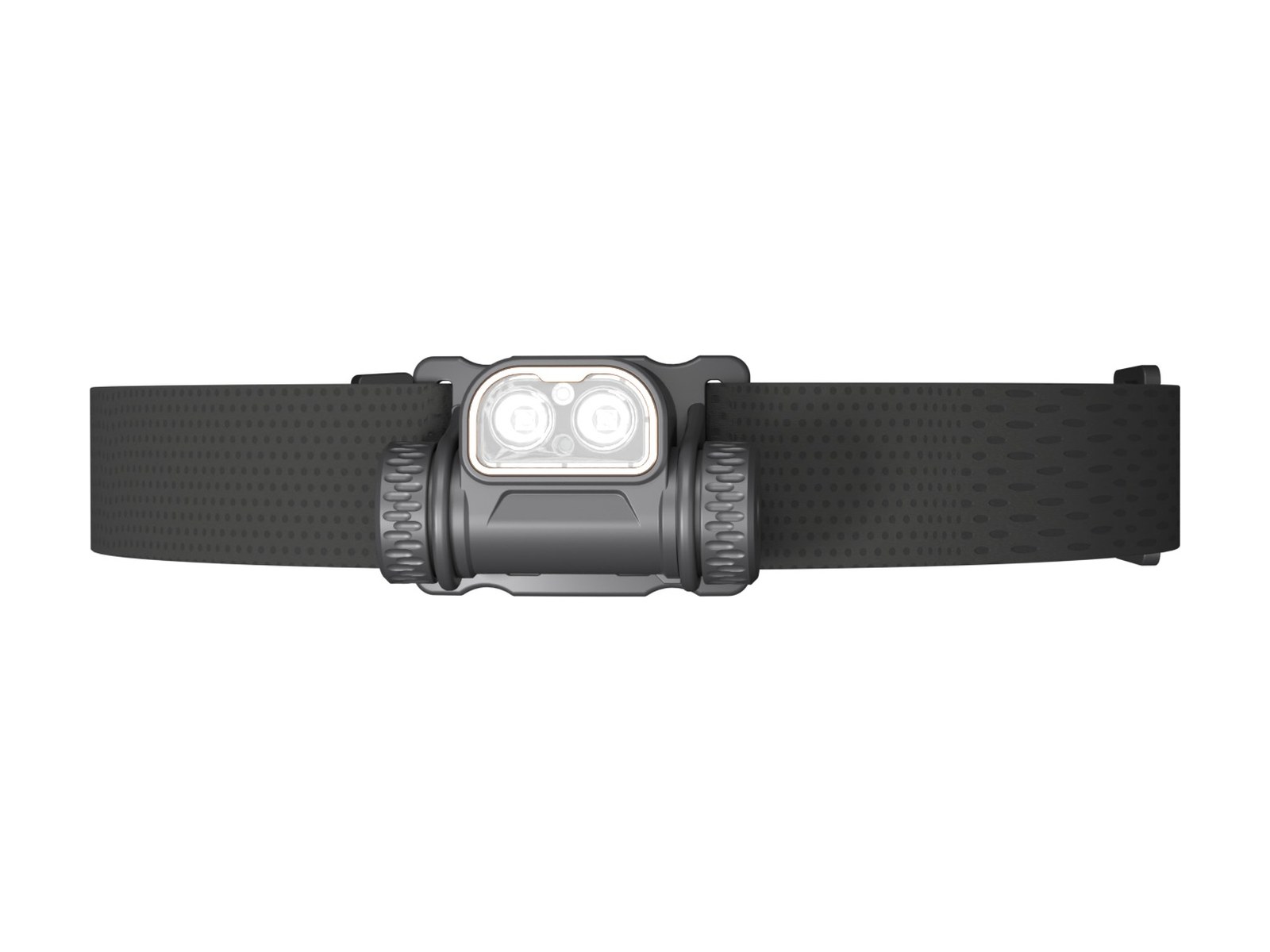
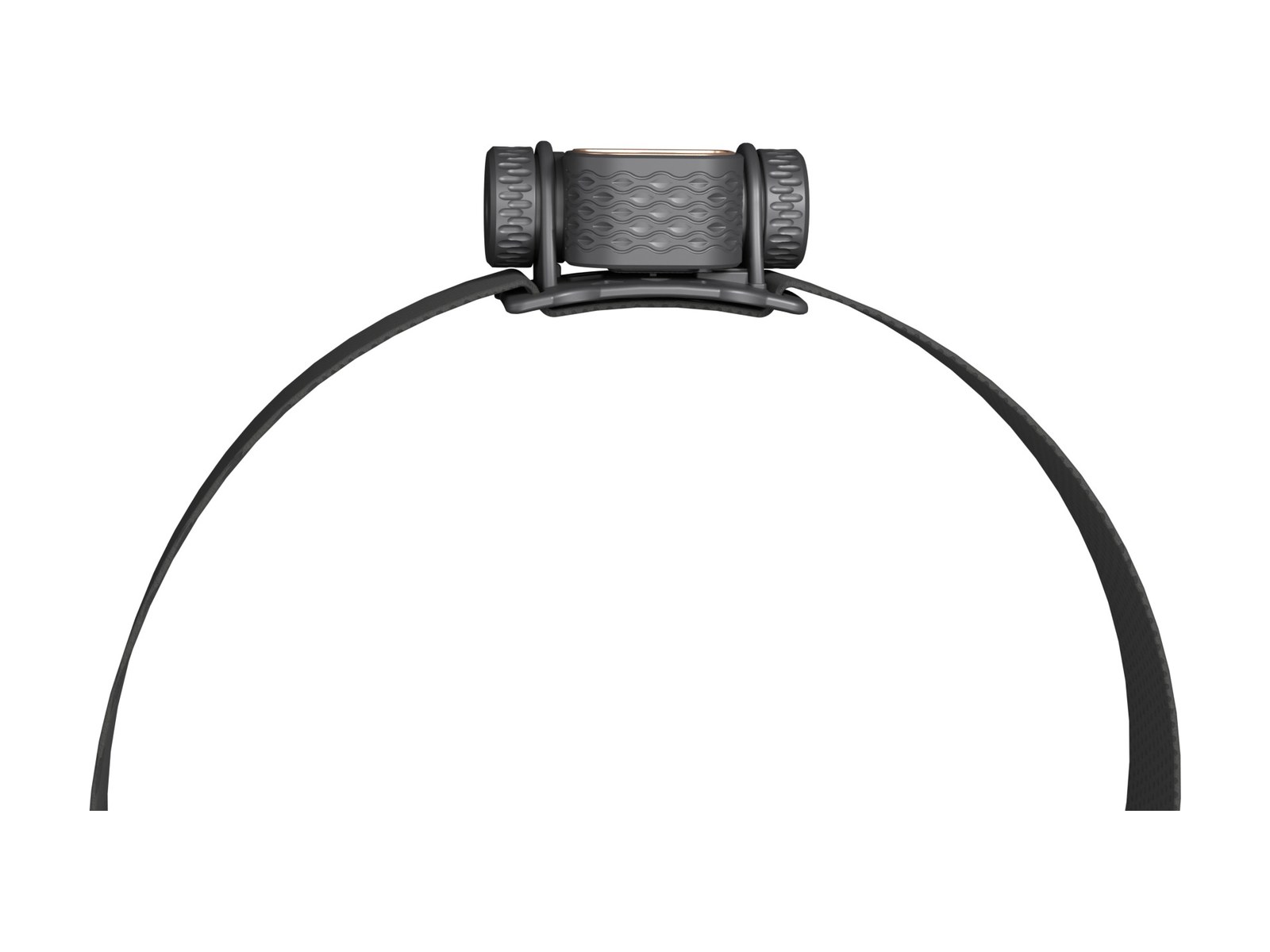
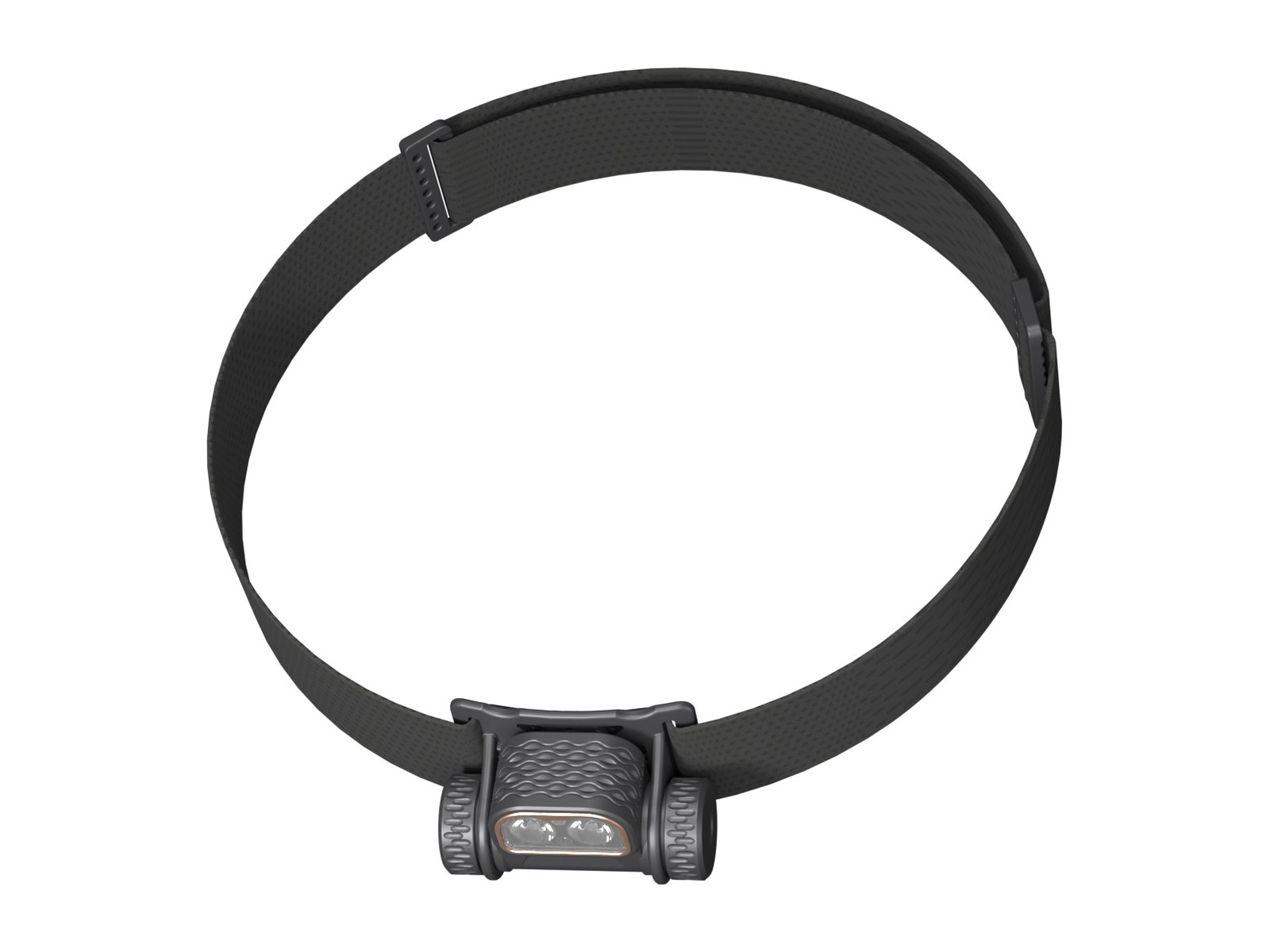
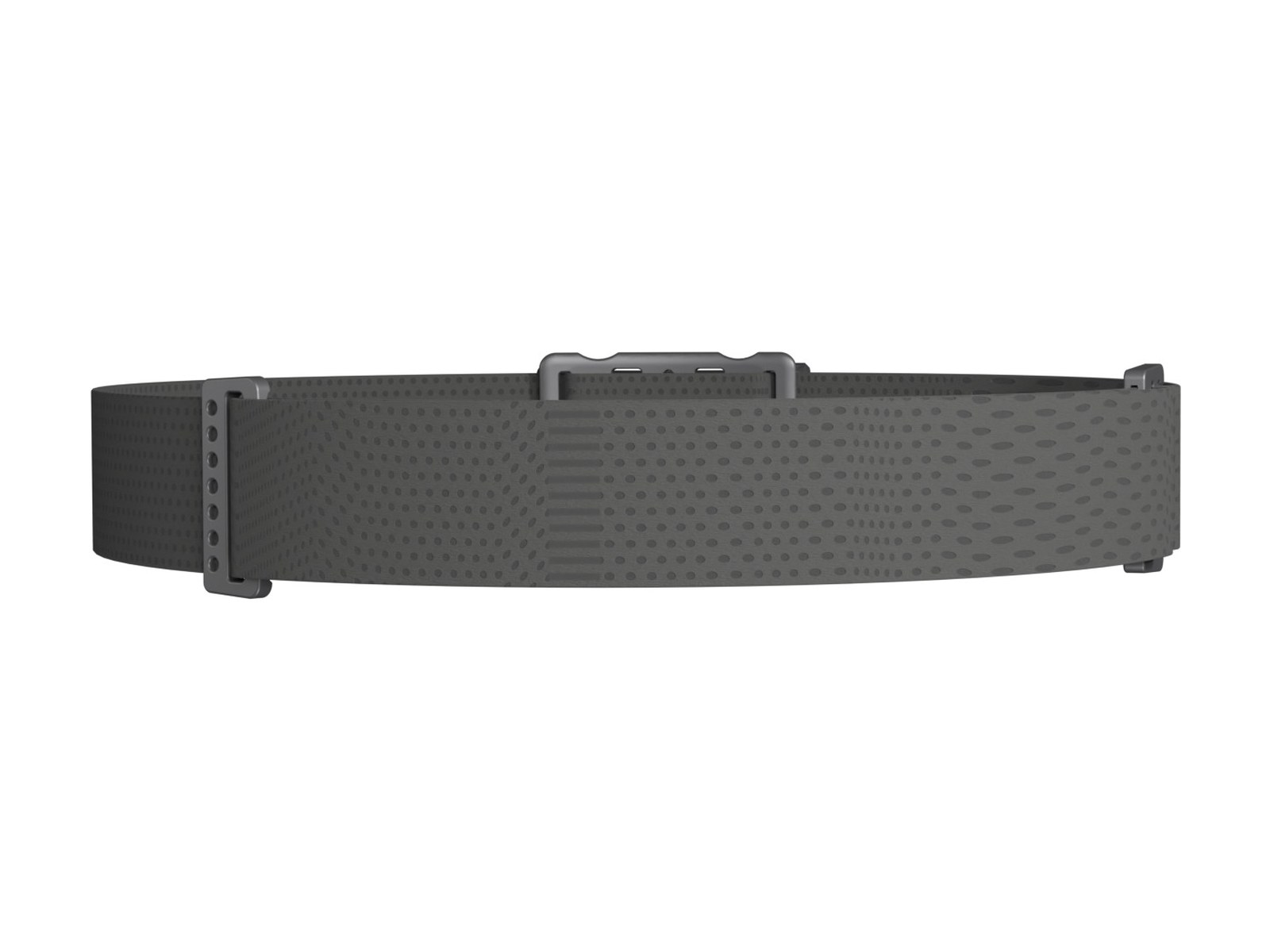
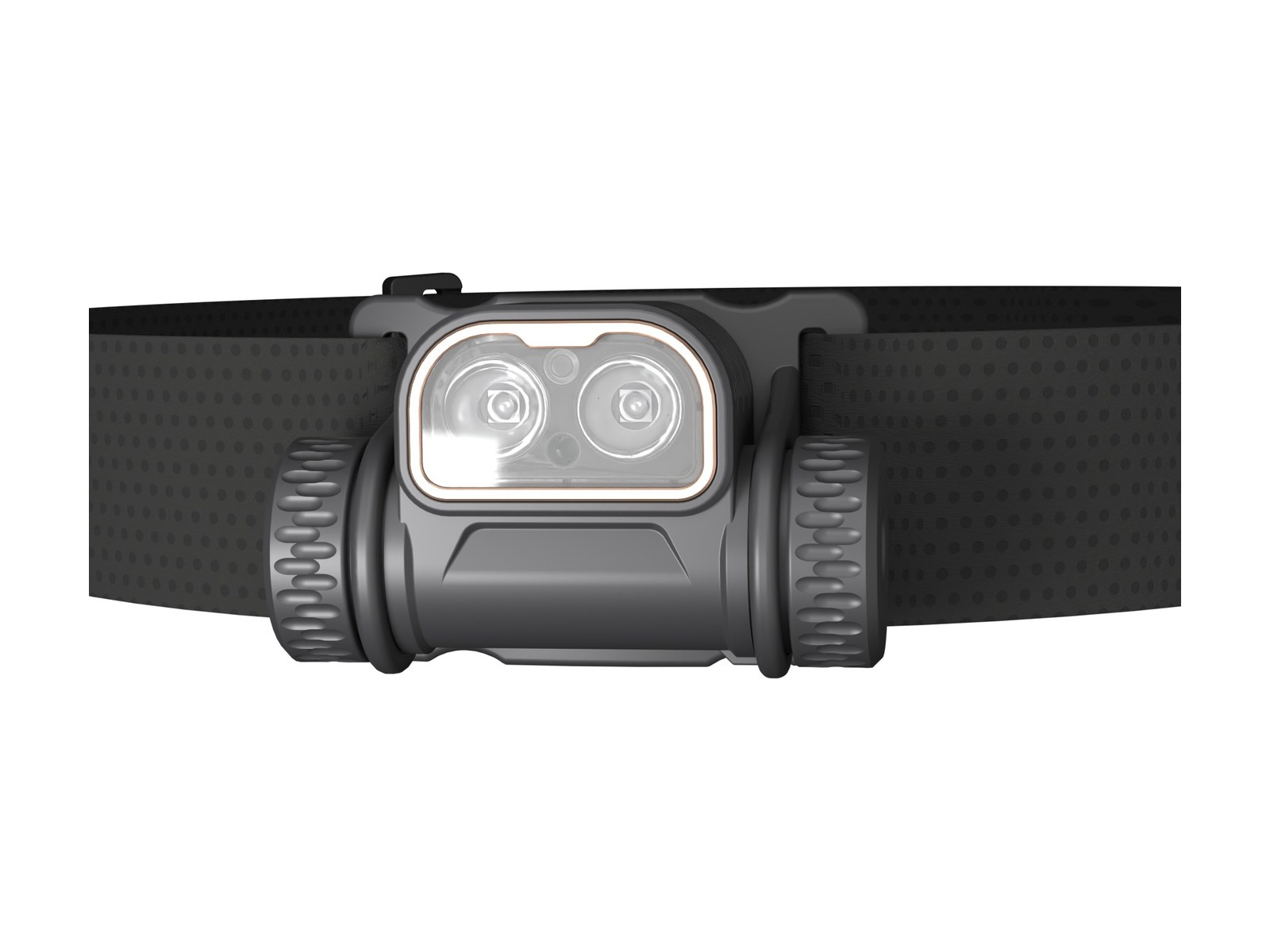
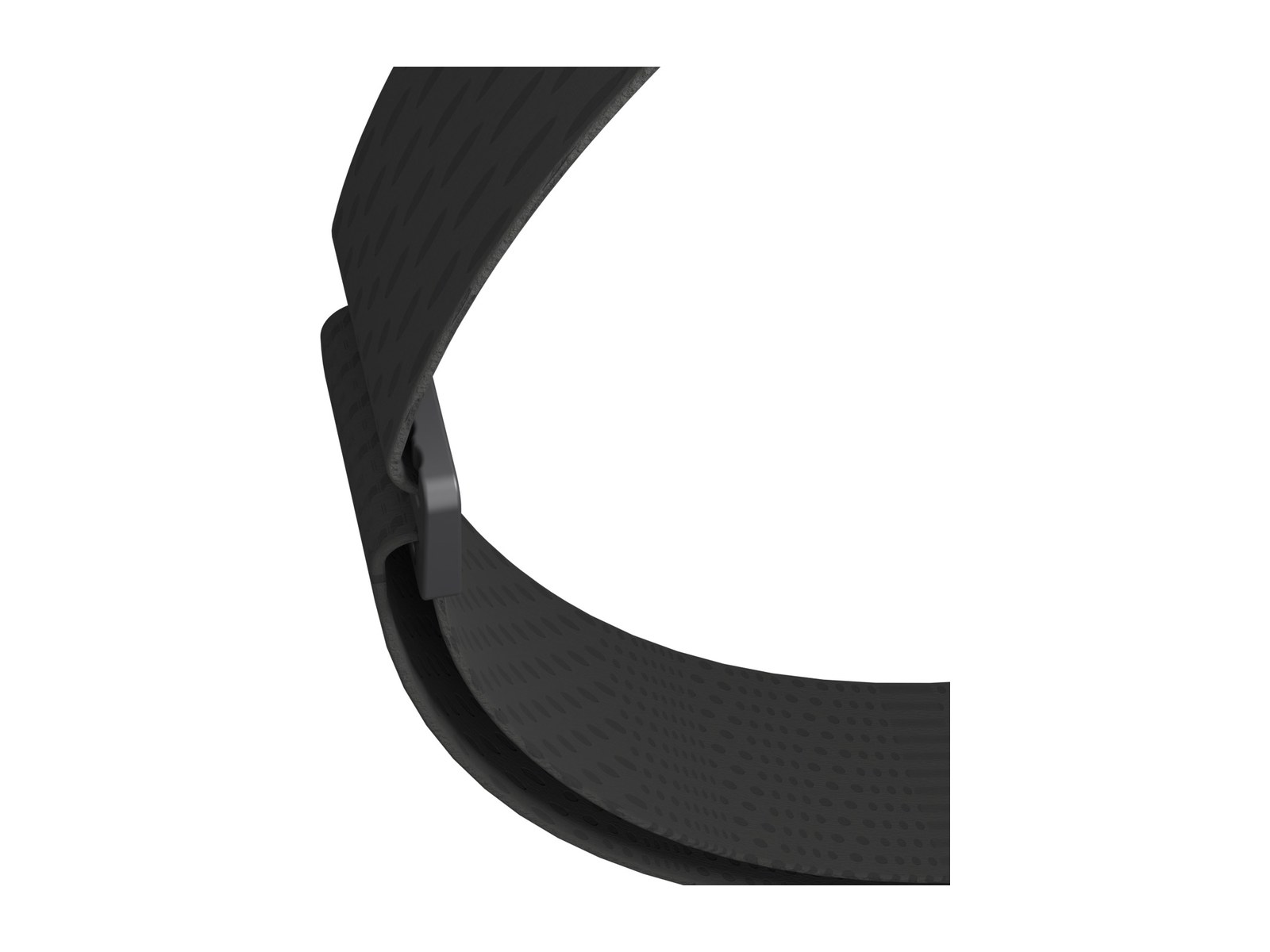
Output, beam distance, mass, ingress, housing and light-source figures are measured on the current configuration to ANSI/NEMA FL1. Per-mode runtime is published with the full datasheet at launch.
The platform the factory was built around.
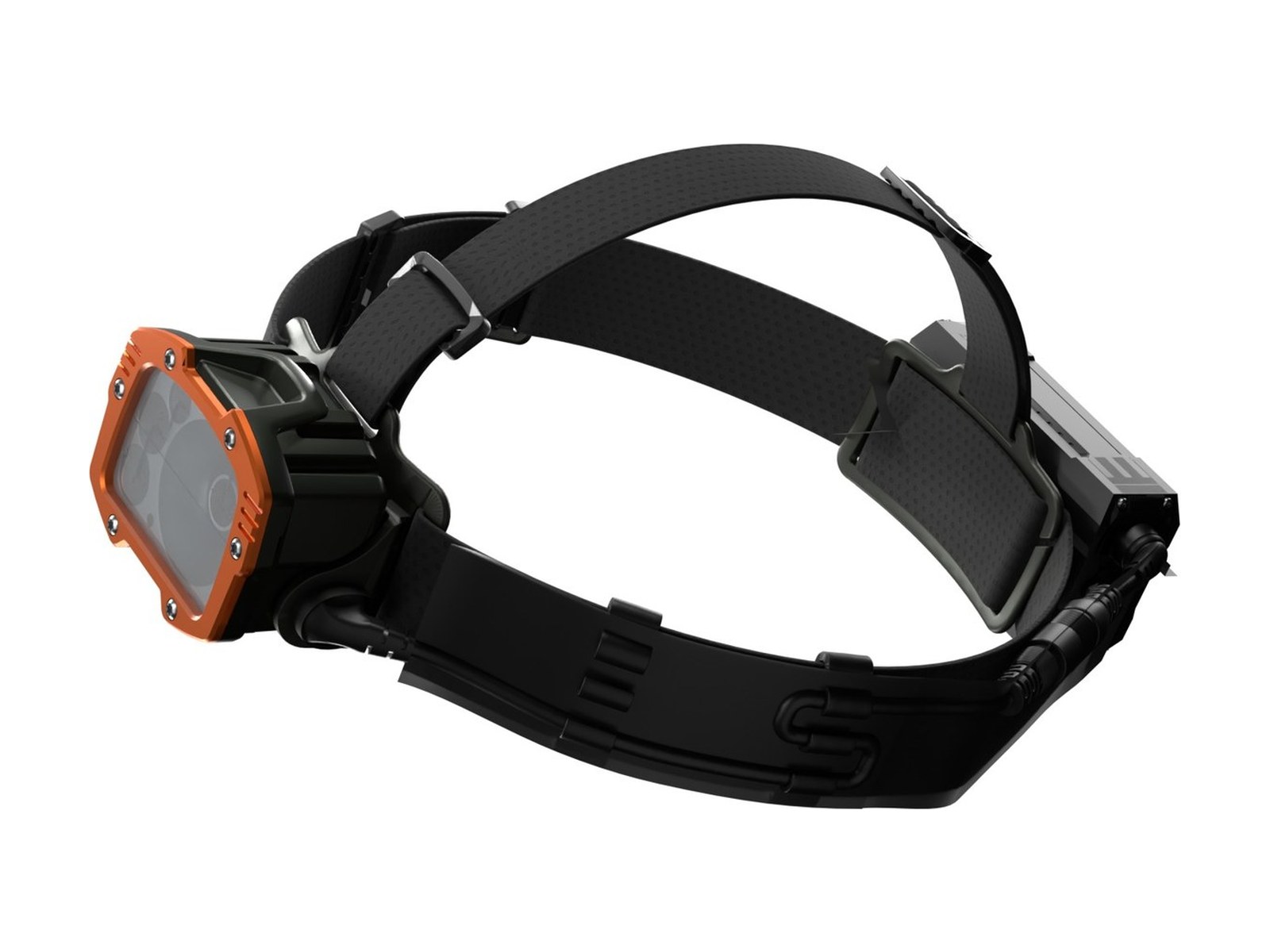
A high-output head carries mass: heat path, cell, driver. Keep all of it on the forehead and the wearer pays for it after forty minutes. The M3 moves the cell to a rear pack and leaves the front housing to the metal that has to be there anyway.
The bezel is machined, not cast, so the lens sits on a flat face with measurable gasket compression. Six screws mean the lens is serviceable in the field rather than a sealed unit you throw away.
Output & runtime
- Max output4,000 lm
- Beam distance450 m (ANSI FL1, target)
- Light sources1× spotlight + 2× flood + front red
- RuntimeFull mode table on the FL1 datasheet at launch
Optical & power
- Front red lightIndependent LED — high / low / flashing
- Colour temperatureNeutral white + warm white
- ThermalSmart step-down management
- BatterySplit pack, 2× 21700 Li-ion
- ChargingUSB-C, rechargeable
Body & finish
- HousingAluminium die-cast
- SwitchingRotary selector + electronic button, lockout
- MountingHelmet / NVG compatible
- Standard colourBlack (custom from 1,000 pcs)
- BrandingLaser-marked, nothing moulded in
Environment
- IngressIP68 — 2 m submersion
- Impact2 m drop, six faces
- Operating temp.−20 °C to +55 °C
- Mass, with pack413 g (measured)
- Charging portUSB-C
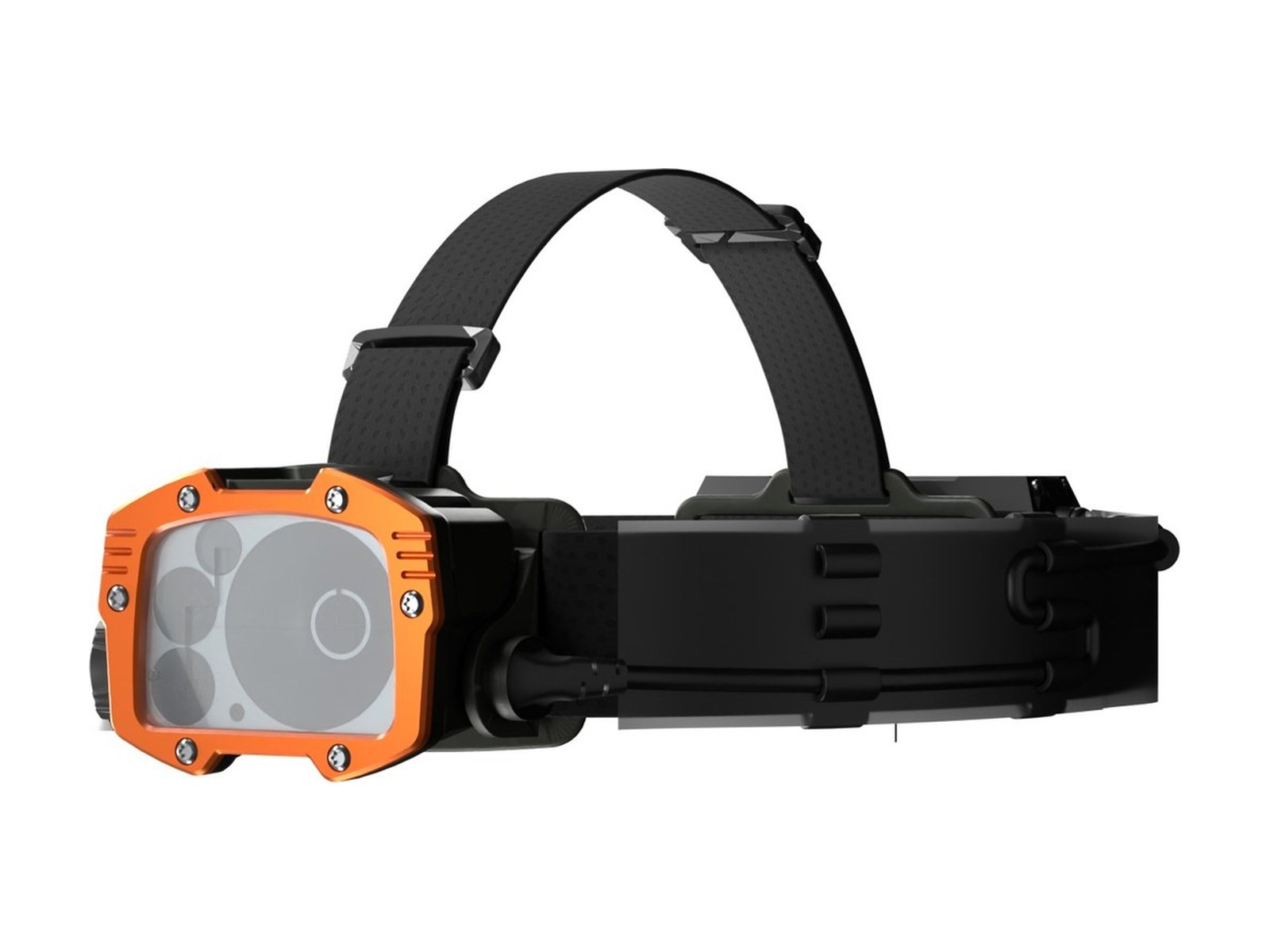
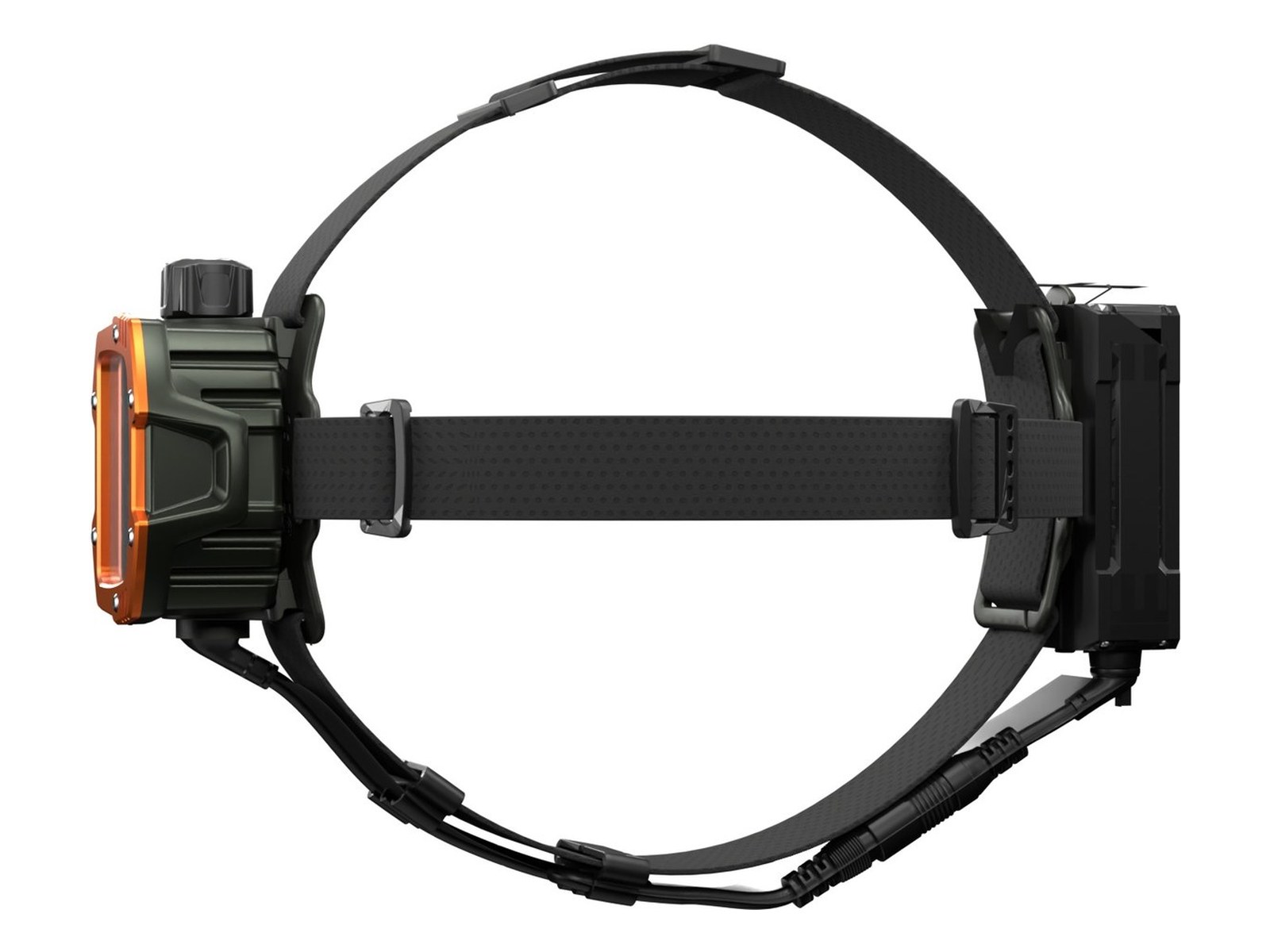
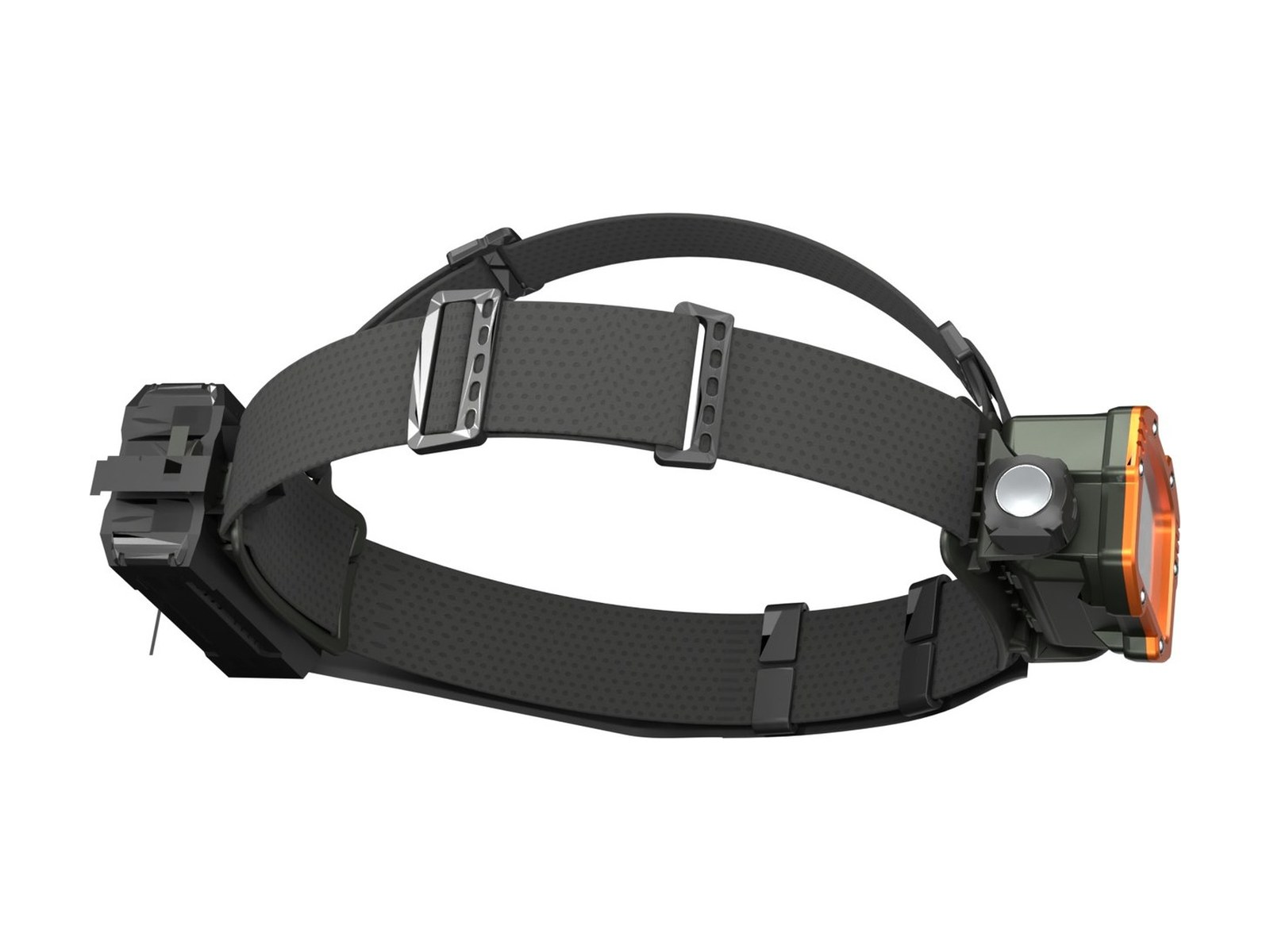
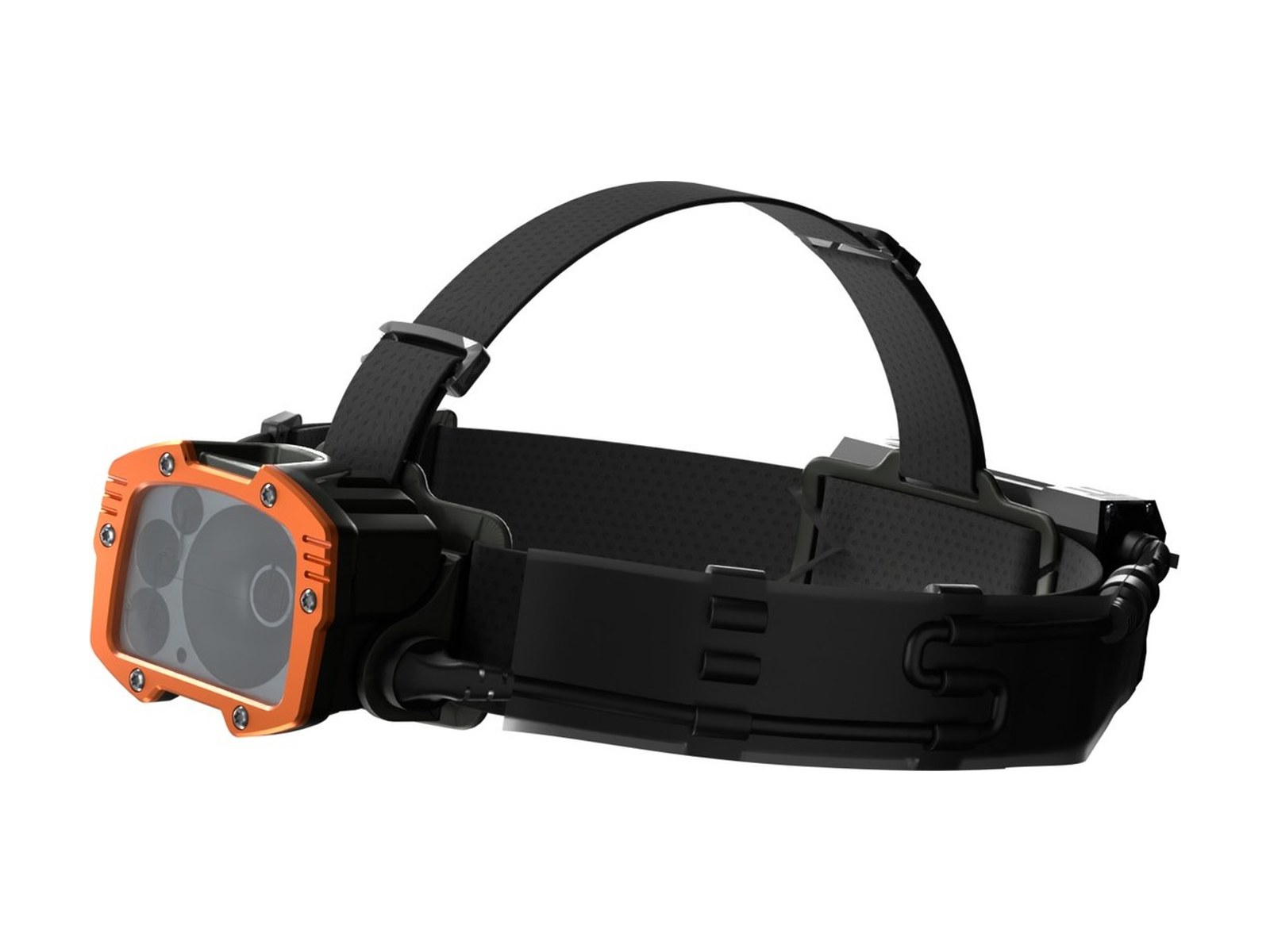
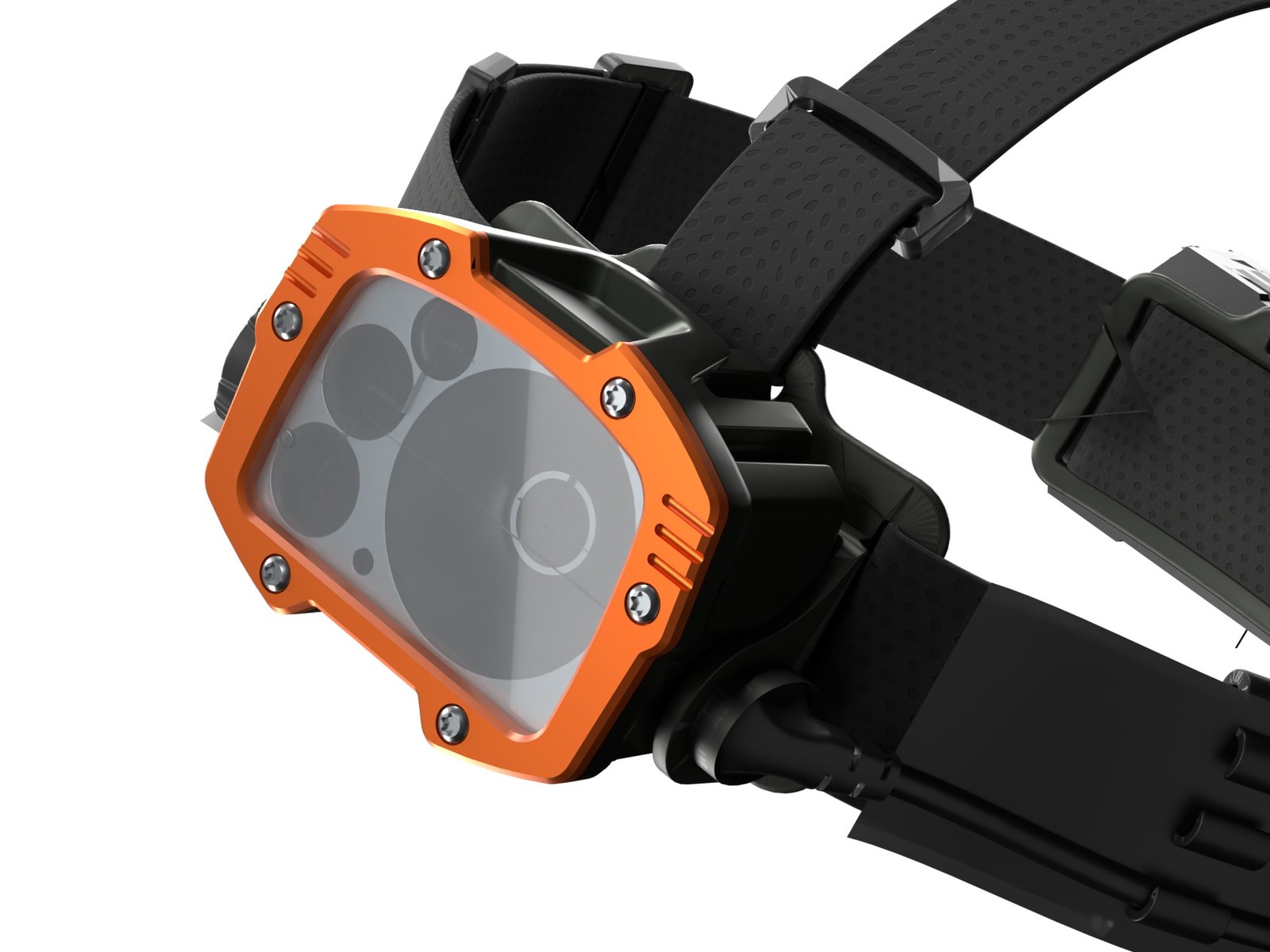
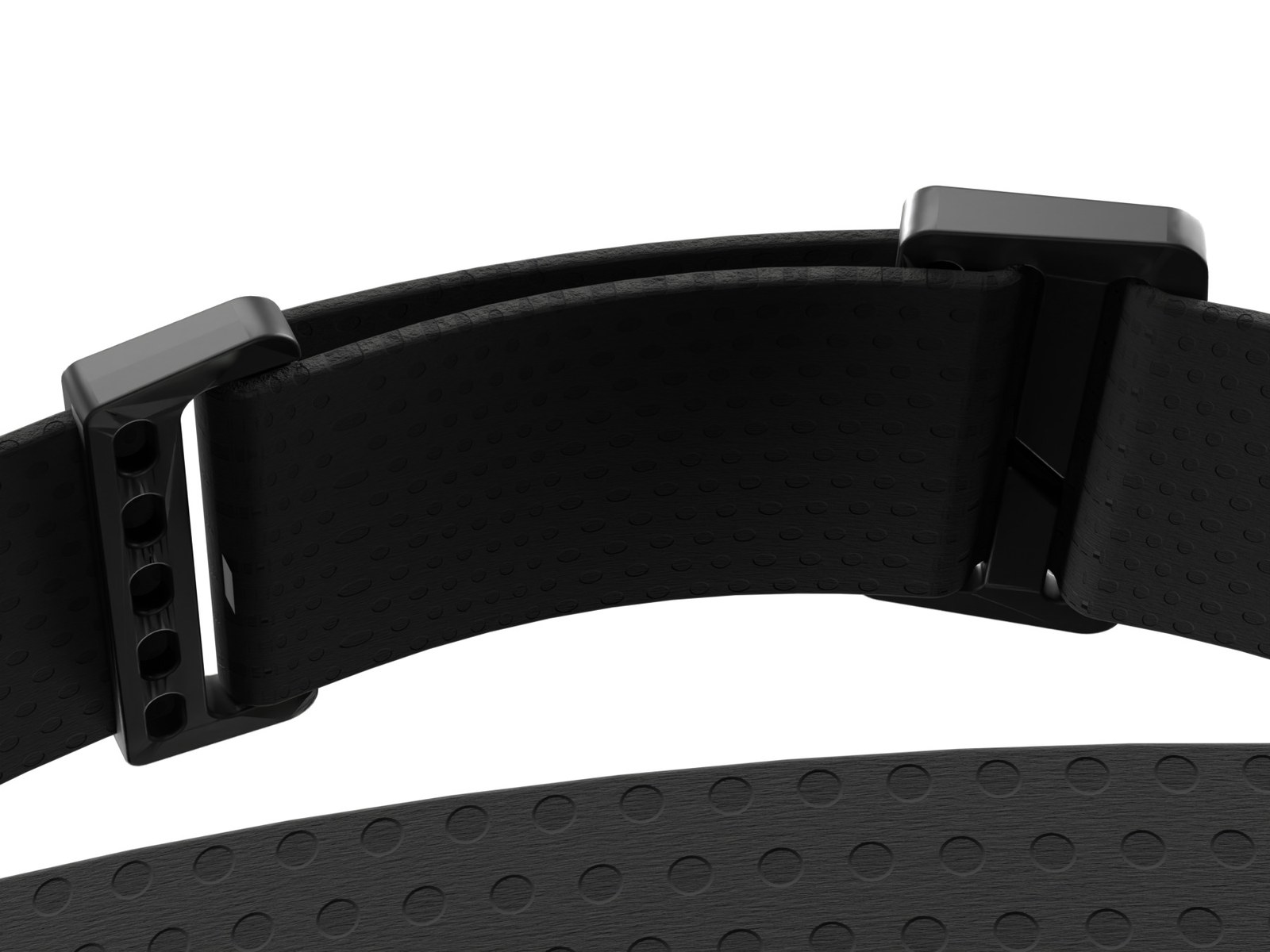
Shown in a custom orange bezel; standard production is black, with any colour from 1,000 pcs. Output, mass, ingress, housing and light-source figures are confirmed for the current configuration. Beam distance and runtime are design targets pending the ANSI/NEMA FL1 third-party report, issued with the datasheet at launch.
Plastic housings are cheap until the LED gets hot.
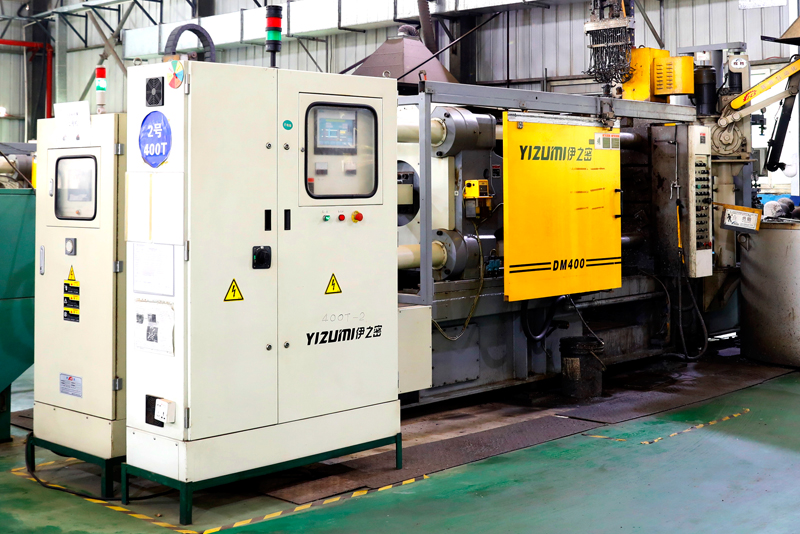
High output in a head-mounted light means heat has nowhere to hide. A die-cast body — aluminium where cost matters, magnesium where every gram counts — spreads and dissipates it, keeps the driver and cell inside their limits, and holds its shape through drops and pressure changes.
- Better thermal path, so a higher output class stays usable instead of stepping down in seconds
- Structural stiffness without extra wall thickness, which keeps weight off the forehead
- Stable sealing geometry under heat cycling and impact
- Premium feel in hand — the difference a buyer notices before reading the spec sheet
Ask for the datasheet, not the brochure.
Any model on this page comes as a PDF datasheet with the test data behind it — and a sample you can measure yourself.