
Ultralight metal headlamps, 105 g to 135 g
An ultralight headlamp is a mass budget before it is a product: so many grams for the body, so many for the cell, so many for the band and the hardware that holds it together. This page is how we spend that budget across two platforms — and where we stop short of claiming more than the numbers support.
We supply brands, importers and retailers. Every unit here is built under a customer's label from a mould we already hold. We do not sell single lamps to end users.
Where the grams actually go
Three items decide the number on the box: the housing, the cell, and the band assembly. A die-cast metal housing is the heaviest of the three per cubic centimetre, which is why most brands reach for plastic. It is also the only one that can do three jobs at once — structure, heat spreader and cell compartment — and that is the trade we make.
Put the cell in the body and the lamp carries nothing behind the head. That removes a rear pack, a cable, a strain-relief entry and the counterweight needed to balance them, which on a split-pack design is often 80 g or more sitting at the back of the skull. The mass that remains sits forward, low, and close to the band, so it moves less when the wearer does.
The band is where cheap programmes lose the weight they just saved. A wide, elastic band with a silicone grip line weighs more than a narrow one and holds a 135 g body far more steadily. We spend grams there on purpose.
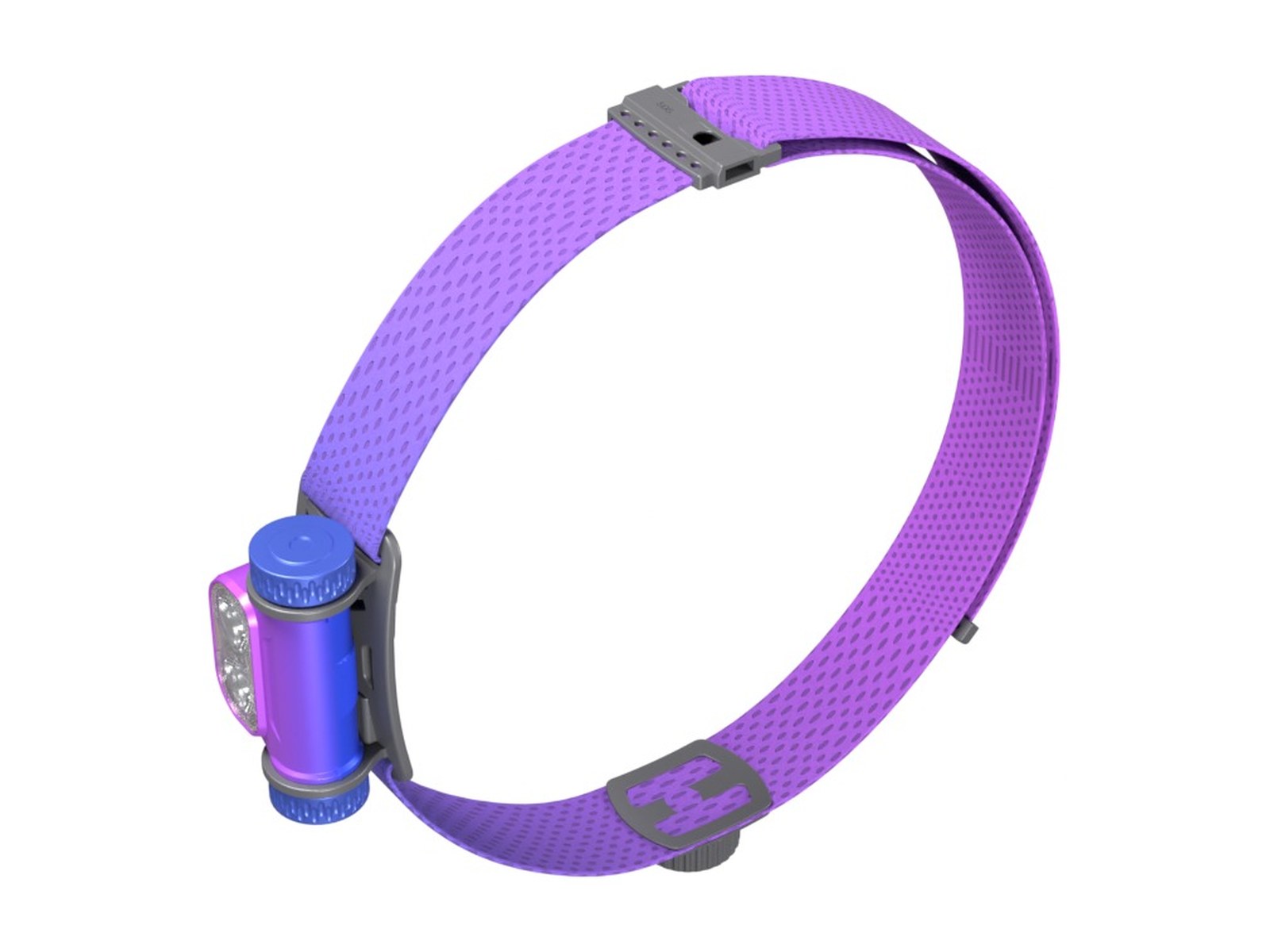
Two tiers, and why the lighter one is the cheaper one
Mass follows output and cell size, not the alloy on its own. The compact tier is lighter because it does less: a smaller cell, a smaller optic, a smaller casting. The magnesium tier is heavier because it runs an 18650 and about 50% more light.
| At equal sealing | HL-M2 — compact | HL-M1 — magnesium |
|---|---|---|
| Mass, with cell & band | 105 g | ≤135 g |
| Housing | ADC12 aluminium, primed and matte-painted | AZ91D magnesium, conversion coated and painted |
| Cell | 1× 18350, in the lamp, USB-C on the cell | 1× 18650, in the body, USB-C under a sealed flap |
| Max output | 1,200 lm | 1,600–1,800 lm |
| Light sources | Spot + flood + red | Spot + flood + red, plus CR123A backup |
| Where it sells | Everyday and retail volume tiers | Ultralight and high-output specialist tiers |
| Why pick it | Lowest mass and lowest landed cost per unit | Lightest body at 1,600 lm and above |
Both bodies are die-cast metal and both are sealed to the same 2 m standard. The difference a buyer feels is where each one sits on a shelf, not which metal is nominally better. Full figures for the third platform, HL-M3 at 4,000 lm, are on the datasheet index.
The buyers who specify this tier are usually building a line for trail running and ultra-distance use, where a lamp is worn for six hours at a stretch and mass is the first thing a reviewer weighs. That is a shelf decision before it is a product one — which is why the mass figure, not the alloy, is the number this page argues about. The specification brief for that use — output tiers by terrain, beam pattern, cell choice — is on the trail running page.
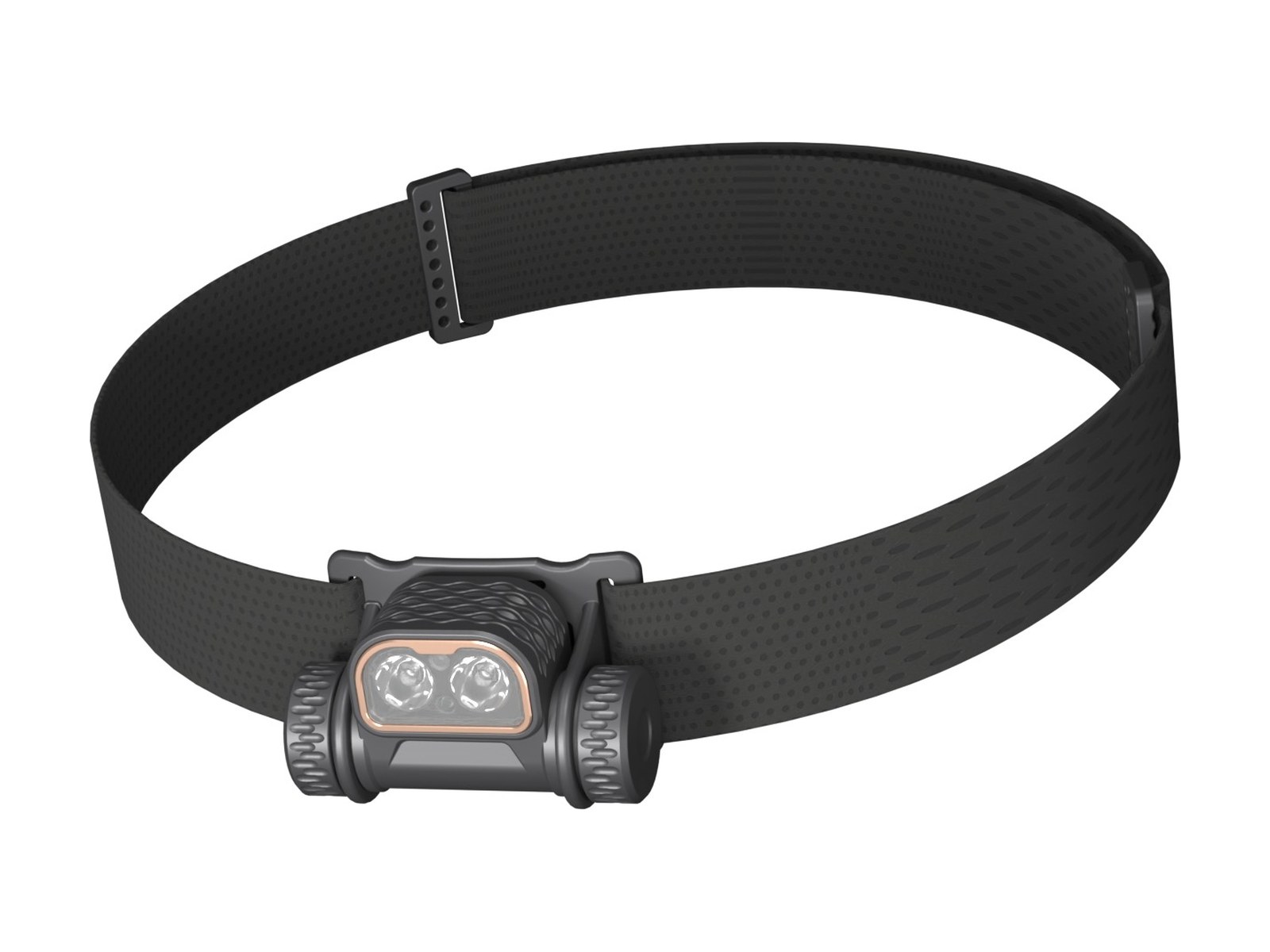
What we will not put on this page
“The lightest headlamp in the world” is a claim that expires the moment a competitor ships something 5 g lighter, and it is usually made by comparing a bare lamp against a competitor's lamp with the band on. We will not write it.
What we will write is narrower and checkable: at 1,200 lm and 1,600–1,800 lm, in a sealed metal body, these are among the lightest headlamps we know of in their output class — and every figure is quoted with the cell and the band included, on a calibrated balance, in house.
If a lighter metal-bodied lamp exists at this output, we would like to see it. Send the brand and the model and we will measure ours against it and publish the result either way. That is a better sales document than an unqualified superlative, and it is the only version of the claim that survives a buyer's own verification.
- Quoted as a ceiling: 105 g and 135 g are maximums, so a retail box figure stays true across batches.
- Same basis every time: lamp + cell + band, no packaging, no spare cell.
- Output stated with it: a mass figure without a lumen figure is a marketing number, not a specification.
Mass, output, ingress and housing data are confirmed for the current configuration. Beam distance and runtime are design targets pending the ANSI/NEMA FL1 third-party report, issued with the datasheet at launch. All photometric figures are measured on the in-house integrating sphere at 25 °C ambient.
Questions buyers ask about ultralight platforms
Is 135 g light for a metal headlamp?
For a sealed metal body running 1,600–1,800 lm with the cell inside the housing, yes. Plastic lamps go lower and we say so. The comparison only means something at equal output and equal sealing.
Why is the aluminium model lighter than the magnesium one?
Because it does less. A single 18350 and a smaller optic land at 105 g; an 18650 and 50% more output land at 135 g. Mass follows output and cell size before it follows alloy.
Does less metal mean it runs hotter?
Less metal absorbs the same heat, so the thermal design carries more. Thin magnesium walls let the housing act as the spreader; the die runs a few degrees warmer while the LED junction and cell stay inside their limits.
What does the weight figure include?
Lamp, cell and band, as shipped, on a calibrated balance. No packaging, no spare cell, no cable — and published as a ceiling, not a typical value.
Can I brand it as my own?
That is the only way we sell. Housing geometry, optic position and sealing are fixed on the mould; LED bin, colour temperature, driver levels, cell capacity, finish, logo, packaging and market label are yours. No tooling invoice on a standard model.
Do you sell to end users?
No. Brands, importers and retailers only — every unit leaves with a customer's label on it.
Tell us the output you need and the mass you can sell. We will tell you which platform fits.
Both tiers exist on moulds we already hold. Ask for the mass delta and the landed cost per unit, side by side.